GS38 Voltage Tester: What UK Apprentices Need for Safe Isolation
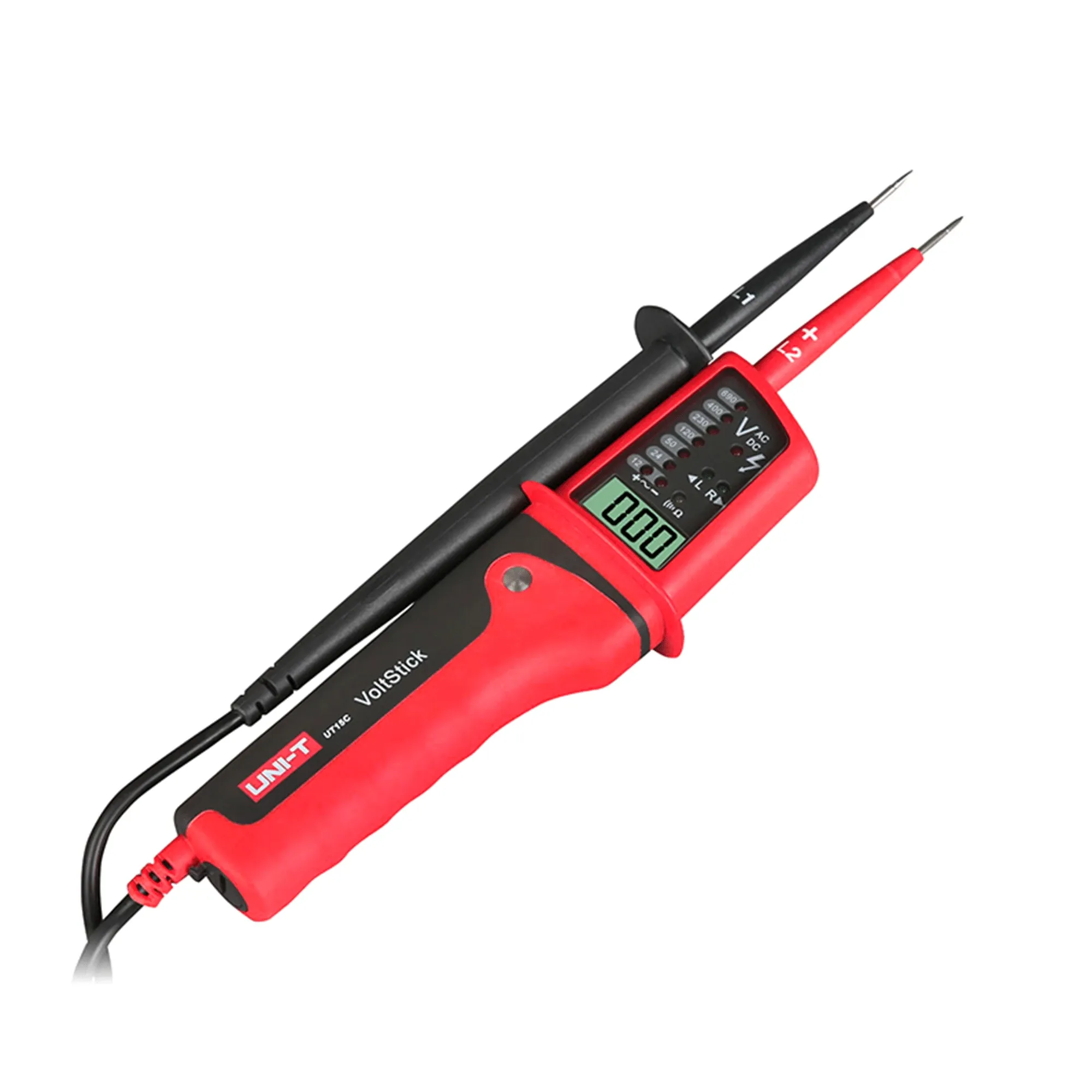
A GS38 voltage tester is a two-pole voltage detector whose probes and leads follow the HSE's GS38 guidance: finger barriers, insulated probes with no more than 4 mm of exposed metal tip, sheathed captive leads and a CAT rating that matches the board you are testing. That checklist — not the badge on the front — is what an assessor checks. Here is how to meet it without stretching an apprentice budget.
What GS38 actually is
GS38 is the Health and Safety Executive's guidance note on electrical test equipment for use on low voltage systems — the document that describes what safe test probes, leads, lamps and voltage detectors look like. It is guidance rather than a law in itself: the legal duty sits in the Electricity at Work Regulations 1989, which require danger to be prevented when working on or near electrical systems. In practice, though, GS38 is the benchmark. Colleges teach it, site supervisors check against it, and assessment centres expect your kit to meet it.
That distinction matters when you are buying your first tester. Nobody prosecutes you for owning a non-compliant probe set — but an assessor can refuse it, and a supervisor can send you back to the van for it. For an apprentice, "GS38 voltage tester" really means "a tester nobody can object to".
The GS38 compliance checklist
Work through this list against any tester you are considering:
- Probe tips: insulated so that no more than 4 mm of metal is exposed, measured across any surface of the tip. GS38 strongly recommends 2 mm or less where practicable, or spring-loaded retractable shrouds.
- Finger barriers: moulded guards that stop your hand sliding onto the tip mid-test.
- Leads: well insulated, coloured so one lead is easily told from the other, sheathed against mechanical damage, and with no exposed conductor anywhere except the tip. Captive leads sealed into the tester body remove the risk of a lead pulling out live.
- Fusing: when leads are used with a multimeter, GS38 recommends high-breaking-capacity (HBC) fuses, usually rated at no more than 500 mA. Dedicated two-pole voltage detectors built to BS EN 61243-3 have their protection designed in.
- Category rating: the tester and leads should carry a CAT marking that covers where you test — CAT III for distribution boards and fixed installations, CAT IV towards the origin of the supply.
The ATUTEN UT15C ships with shrouded, fused GS38-compliant probe leads and is rated CAT IV 600 V / CAT III 690 V, so it clears every line on that list as delivered.
Why proving dead needs a two-pole tester
A two-pole detector measures between two points — line to neutral, line to earth, neutral to earth — and shows the result on an LED bargraph. There are no ranges to set and nothing to configure, which is exactly why safe isolation procedure is built around it: the tool cannot be on the wrong setting. The UT15C's voltage bargraph also indicates higher voltages even without batteries, so a flat cell cannot keep mains voltage hidden behind a dead display.
A multimeter can read voltage, but a mis-set dial or a blown internal fuse can show nothing on a live circuit. Non-contact voltage pens have their own failure modes — we compare them properly in our non-contact vs two-pole voltage tester guide. And whichever detector you use, proving dead is only valid alongside a proving unit — the prove-test-prove routine covered in our voltage tester with proving unit guide.
What assessors look for
With an AM2 or centre assessment booked, the safe isolation station is where kit choices get examined. Assessors typically check that:
- your voltage detector and leads meet GS38 — exposed tips within the 4 mm limit with shrouds fitted, finger barriers intact, insulation undamaged;
- you prove the tester on a proving unit or known live source before and after testing the circuit;
- you test every relevant conductor combination, not just line to neutral;
- the CAT rating covers the board you are working on.
An exposed tip over 4 mm is precisely the kind of detail an assessor will pick up, and it is an avoidable way to lose marks — or to have the tester refused on the day. Check the shrouds are on the probes before you pack your bag.
Meeting GS38 on an apprentice budget
A full first toolkit runs into thousands of pounds once hand tools, PPE and instruments are counted, and the tester line in that budget is often £60–£70. Premium-brand two-pole testers do the same core job at considerably higher prices; what decides compliance is the GS38 checklist above, and that checklist does not carry a minimum price.
The UT15C costs £64.04 including VAT and covers the full apprentice brief: 12 V–690 V AC/DC indication, continuity with a buzzer and Rx LED, single-pole live detection, IP65 sealing for wet sites, an LED torch for dim cupboards, and three-phase rotation indication you will want the first time a commercial job lands — see our phase rotation tester guide. It comes with a 12-month UK warranty and UK support, next-day dispatch and free delivery, so a tester that dies the week before an assessment is a recoverable problem.
Pre-use checks that become habit
GS38 compliance is a state, not a one-off purchase. Before every use:
- Inspect leads for nicks, cracking or stretched insulation; replace damaged leads rather than taping them.
- Check the probe shrouds are fitted and the tips are straight.
- Prove the tester on a proving unit or known live source.
- Test the circuit at every relevant conductor pair.
- Prove the tester again on the same source.
Do that every time — including in front of an assessor — and the tester stops being a compliance worry and becomes muscle memory.
Frequently Asked Questions
Is GS38 a legal requirement?
No. GS38 is HSE guidance. The legal duty comes from the Electricity at Work Regulations 1989, but GS38 is the benchmark used on site, in college and in assessments, so equipment that follows it is the practical expectation.
What probe tip length does GS38 allow?
No more than 4 mm of exposed metal tip, with a strong recommendation for 2 mm or less where practicable, or spring-loaded retractable shrouds. The UT15C ships with shrouds that keep the exposed tip inside the limit.
Do I need fused leads on a two-pole voltage tester?
Fused leads are a GS38 recommendation chiefly for multimeters, usually with HBC fuses rated at 500 mA or less. Two-pole detectors made to BS EN 61243-3 have protection designed in; the UT15C pairs that with fused GS38-compliant probe leads.
Can I use the ATUTEN UT15C in my AM2?
The UT15C is GS38-compliant with shrouded fused probes and a CAT IV 600 V / CAT III 690 V rating, which is what assessment centres expect for safe isolation. Confirm your centre's kit list, then practise the prove-test-prove routine until it is automatic.
Ready to try ATUTEN UK?
Shop Now — £64.04