Voltage Tester with Proving Unit: The Kit Multi-Trade Engineers Need
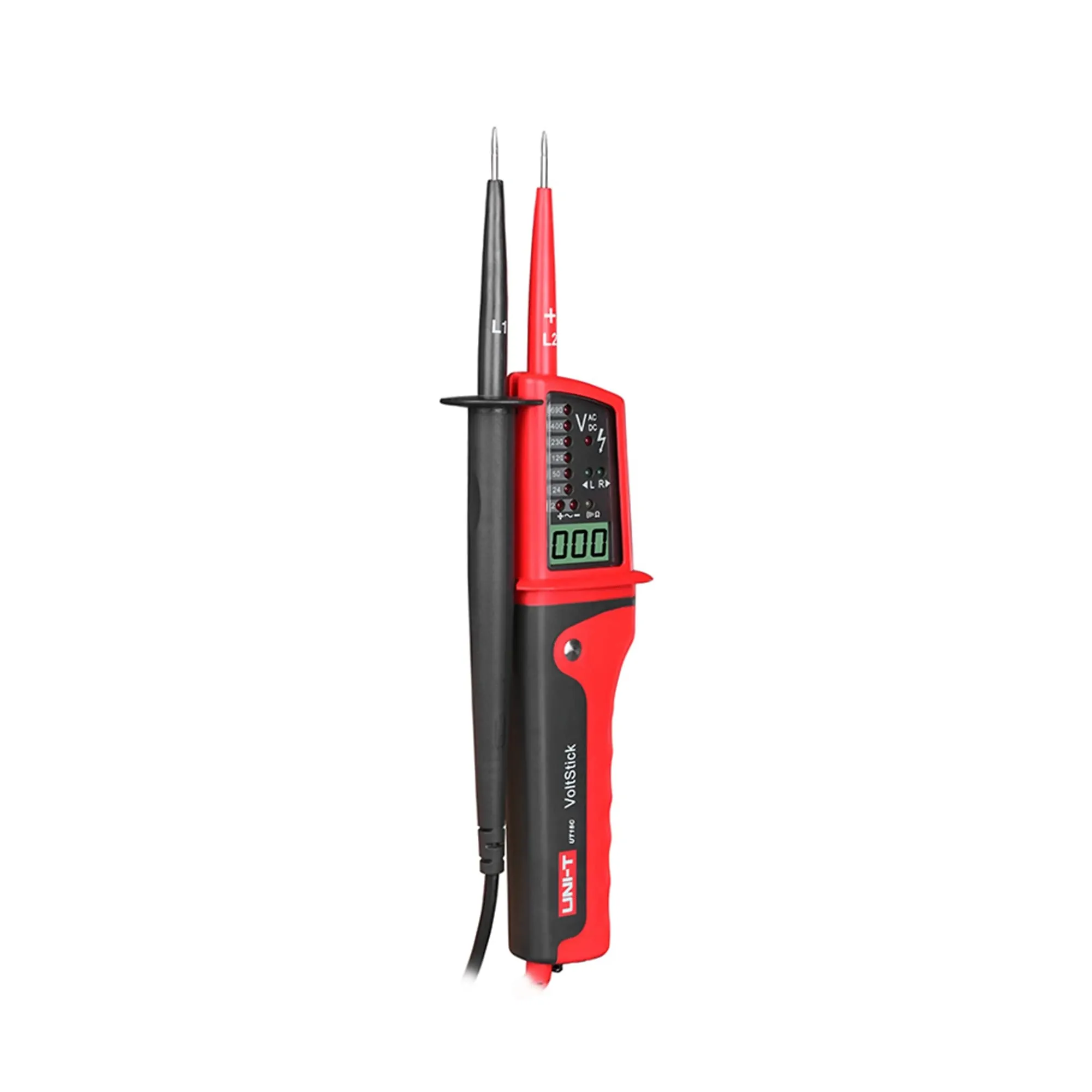
A voltage tester with proving unit is the two-piece kit that lets you prove a circuit dead properly: a GS38-compliant two-pole detector to test the circuit, and a proving unit — a pocket-sized known voltage source — to confirm the detector itself works before and after. For gas engineers, plumbers and kitchen fitters who touch wiring as a side task rather than a trade, it is the difference between assuming a boiler feed is dead and proving it.
Why proving dead matters when electrics is not your trade
Most boiler swaps, cylinder changes and kitchen fits involve a few minutes of electrical work: disconnecting a fused spur, moving a switched live, wiring a programmer. The risk is concentrated in those few minutes, because the person doing them does not spend all day around live boards. Safe isolation — switching off, locking off, then proving the circuit dead — is the routine that makes that side task safe, and HSE guidance is blunt that the proving step needs a proper voltage detector, not a lamp, a neon screwdriver or guesswork.
There is a commercial angle too. If an incident happens while you are working on wiring you had not proven dead with suitable equipment, you will struggle to show you took reasonably practicable precautions under the Electricity at Work Regulations 1989 — an uncomfortable conversation with an insurer, and a worse one with an HSE inspector.
What the kit is and how the two parts work together
The kit has two parts with two distinct jobs:
- A two-pole voltage detector tests between pairs of conductors — line to neutral, line to earth, neutral to earth — and shows the result on an LED bargraph. Built to GS38 guidance, its probes have finger barriers, shrouded tips with no more than 4 mm of exposed metal, and fused leads. There is no dial and no range to set, so it cannot be on the wrong setting.
- A proving unit is a battery-powered source of known voltage. You touch the tester's probes to it and watch the bargraph light up, proving the tester works — first before you test the circuit, and again after.
That before-and-after check is the heart of the method: if the tester responds to the proving unit both times, the dead reading in between was real, not a broken tester keeping quiet. A tester whose voltage indication does not depend on batteries — the ATUTEN UT15C's bargraph reads higher voltages even with flat cells — removes one more way the tool can lie to you.
Why the proving unit is not optional
The failure mode that kills people is not a live circuit reading live — it is a dead-looking reading on a live circuit. A tester with a snapped lead, a blown internal element or a flat display shows exactly the same "nothing" as a genuinely dead circuit. The proving unit is how you tell those two nothings apart.
"Prove on a known live source" can in principle be another live circuit, but on a domestic job that means hunting for a socket you believe is live and healthy, then trusting it. A proving unit in the tool bag is faster, repeatable at the point of work, and does not depend on the very installation you are about to disturb. For occasional electrical work, that convenience is what makes the routine actually happen on a busy install day.
Why a multimeter fails the proving-dead job
Plenty of heating engineers carry a multimeter for fault-finding, and it is the right tool for measuring — but the wrong tool for proving dead. The reasons are practical, not snobbery:
- A multimeter relies on you selecting the right function and range under time pressure; set to ohms or DC volts by mistake, it can read zero on a live AC circuit.
- Its display depends on a working battery and an intact internal fuse — either can fail silently.
- Standard meter probes often exceed GS38's exposed-tip guidance unless fitted with compliant fused leads.
A dedicated two-pole detector has none of those traps: nothing to set, indication that does not need batteries, and GS38-compliant probes out of the box. Keep the multimeter for commissioning readings; prove dead with the two-pole tester. If you are weighing up detector types more broadly, our non-contact vs two-pole voltage tester comparison covers why a beeping pen is not proof either.
Prove-test-prove: the routine step by step
- Identify and isolate the circuit — switch off the MCB or remove the fuse, lock off with a locking device, and keep the key in your pocket.
- Prove the tester on the proving unit: the bargraph should light through its range.
- Test the circuit dead at every relevant pair: line–neutral, line–earth, neutral–earth. On a boiler spur that is the switched live, permanent live, neutral and earth as applicable.
- Prove the tester again on the proving unit. Same response as step 2, and only now is the circuit proven dead.
- Post a warning notice if the isolation point is out of sight of the work, and re-check isolation if you leave and return.
Written down it looks like ceremony; on the tools it takes under a minute, and it is the same minute an electrician spends before touching any conductor.
Choosing a compliant kit without premium prices
For a tool that comes out a few times a week rather than fifty times a day, premium-brand kits are hard to justify — but the £20 bargain-bin route risks non-compliant probes and no support when it fails. The middle path is a compliant, tough tester at a working-tools price. The ATUTEN UT15C is £64.04 including VAT and is built for exactly this use: GS38-compliant shrouded fused probes, 12 V–690 V AC/DC indication, CAT IV 600 V / CAT III 690 V rating, IP65 sealing for damp airing cupboards and outside meter boxes, a continuity buzzer loud enough to check thermostat and valve wiring in a working plant room, and an LED torch for dark corners. The 12-month UK warranty and 30-day returns cover the risk of buying quickly.
Speed matters when the tester breaks mid-schedule: next-day dispatch and free UK delivery mean a cracked tester on Tuesday night does not cancel Wednesday's boiler install. Pair it with a proving unit and the safe isolation half of your toolkit is done for well under premium-brand money.
Where the boundary sits for multi-trade work
A voltage tester with proving unit makes the isolation step safe; it does not extend what work you should take on. Disconnecting and reconnecting a boiler at an existing fused spur is routine multi-trade territory. New circuits, consumer unit work and anything in a bathroom zone falls under Part P and belongs with a registered electrician, and any wiring you would not be happy to certify is wiring to hand over. Proving dead protects you while you do the small jobs — and the honest boundary protects your customer on the big ones.
Frequently Asked Questions
What does a voltage tester with proving unit kit include?
A GS38-compliant two-pole voltage detector plus a battery-powered proving unit that outputs a known voltage. The tester proves the circuit; the proving unit proves the tester, before and after each test.
Can gas engineers legally do the electrical work on a boiler install?
Like-for-like disconnection and reconnection at an existing point is generally within a competent multi-trade installer's scope. New circuits or consumer unit alterations are notifiable under Part P in England and Wales and are work for a registered electrician. Whatever the job size, prove the circuit dead first.
Do I really need the proving unit if my tester has a self-test button?
A self-test checks some internal functions, but HSE guidance on safe isolation expects the detector to be proven against a known voltage source before and after use. A proving unit does that repeatably at the point of work; a self-test button alone does not.
Is the ATUTEN UT15C suitable for boiler and kitchen work?
Yes — it is a GS38-compliant two-pole detector rated CAT IV 600 V / CAT III 690 V with IP65 sealing, continuity buzzer and single-pole live detection for quick switched-live checks. At £64.04 with a 12-month UK warranty it is specified for exactly this occasional-but-critical use.
How often should I replace my test leads?
Inspect before every use and replace at the first sign of cracked insulation, exposed conductor, loose shrouds or intermittent readings. Leads are consumables; the routine of checking them is part of GS38-style good practice.
Ready to try ATUTEN UK?
Shop Now — £64.04