GS38 Voltage Tester: What UK Apprentices Need for Safe Isolation
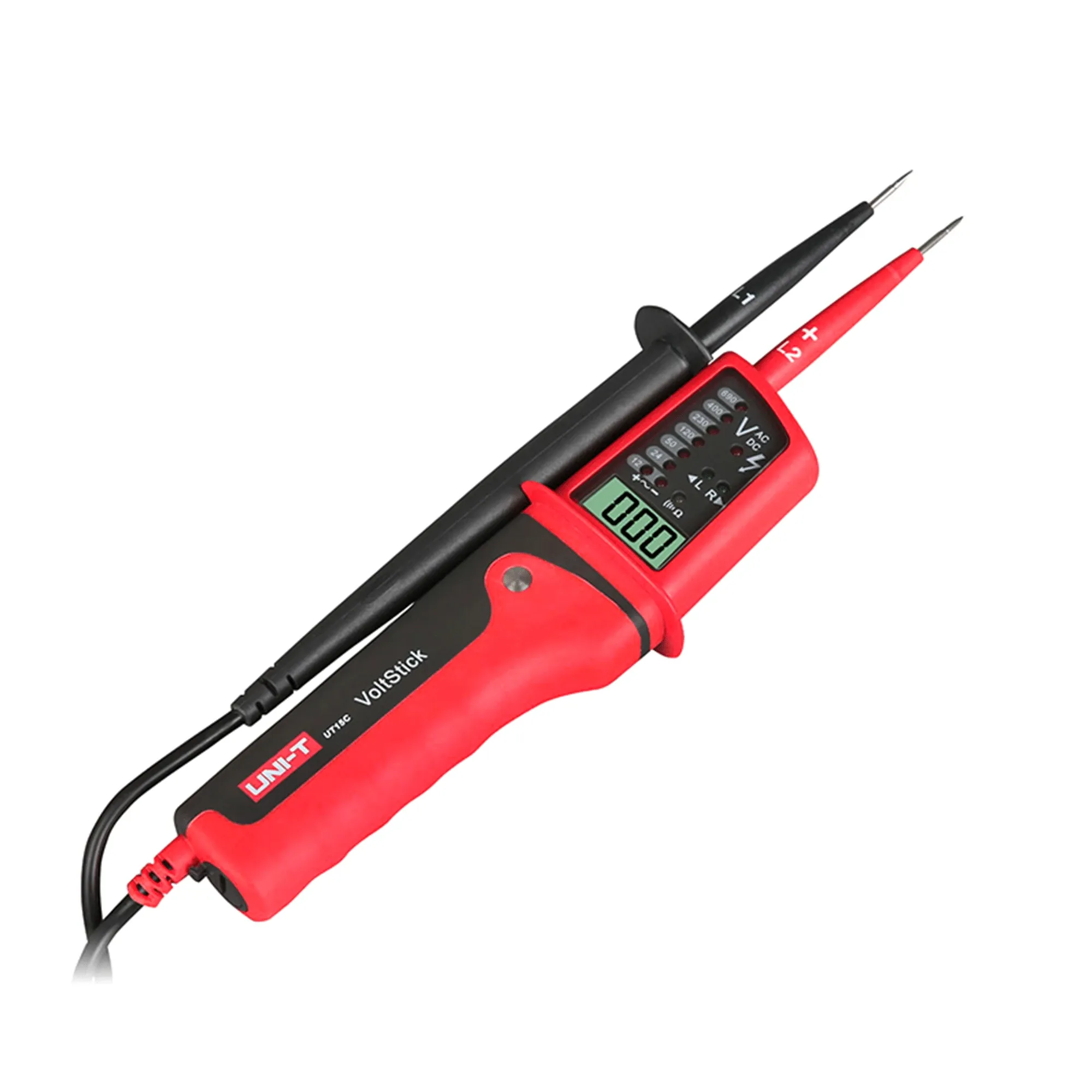
Apprentice Kit List Include GS38 Tester: A Practical UK Guide
UK guide to apprentice kit list include gs38 tester: ATUTEN UT15C two-pole use, £64.04 live price, GS38 shrouds, prove-test-prove — with electrical safe…
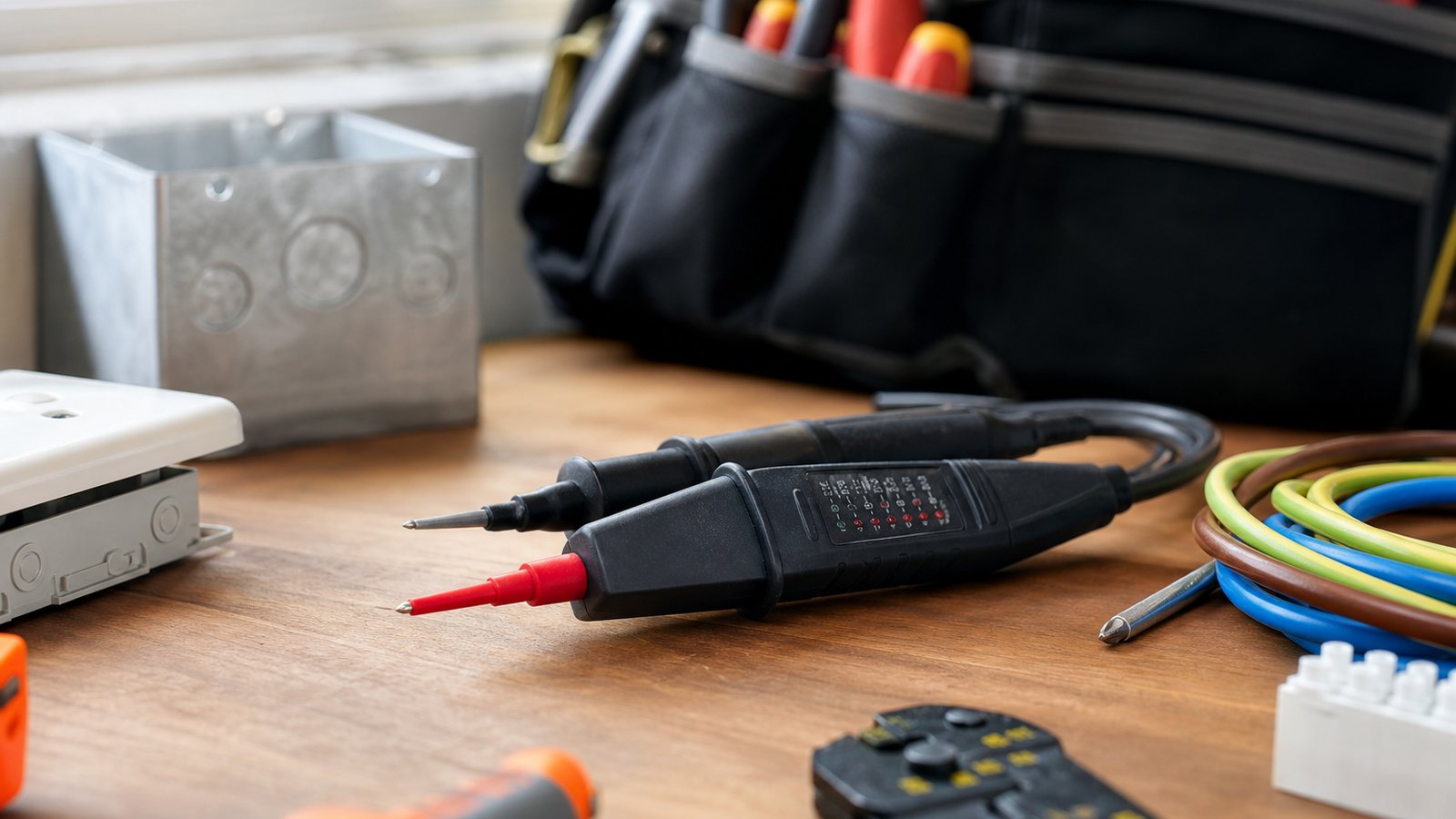
For UK readers researching apprentice kit list include gs38 tester, a dedicated two-pole voltage tester such as the ATUTEN UT15C can support prove-test-prove safe isolation and, where needed, 3-phase rotation checks — provided you fit GS38 tip shrouds, verify the instrument on a known live source or proving unit before and after, and never treat a single reading as a substitute for lock-off.
What “apprentice kit list include gs38 tester” usually means in a UK search
People typing apprentice kit list include gs38 tester usually want a decision path: pick a compliant two-pole instrument, prove it works, isolate, test for dead, and re-prove — not a shortcut that skips lock-off. On a dedicated 2-pole tester, the useful output is a clear LED indication you can trust only after the instrument itself has been verified.
You’re standardising a second van or apprentice kit on the same two-pole model you already trust.
If you want the live product page, start here: ATUTEN UT15C voltage & phase tester. Related reading on this site: best gs38 voltage tester for apprentice electrician and does ut15c meet gs38 with shrouds. For an already-live GS38 overview, see gs38 voltage tester.
Specs you can verify on the live site
| Claim | Where it appears |
|---|---|
| Price | £64.04 inc. VAT on homepage and detail (£53.37 ex. VAT) |
| Voltage indication | 12 V–690 V AC/DC LED bargraph |
| Phase rotation | 100 V–690 V (50–60 Hz); L/R LEDs; batteries required |
| Continuity | 0–100 kΩ buzzer + LED; only on confirmed dead circuits |
| Safety / environment | GS38 with <4 mm shrouds (FAQ); IP65; CAT IV 600 V / CAT III 690 V |
| Power / weight | 2× AAA included; 210 g; torch + single-lead live tip (supplementary only) |
| Commerce | Free UK delivery; 30-day returns; 12-month warranty (live pages — not “2 years”) |
Treat comparison-table peers (eBay est. £80.05 / High Street RRP £102.46, checked 8 May 2026 on-site) as marketing context, not your invoice.
Product-specific figures and performance claims in this section should be verified against current manufacturer documentation and the delivered item; specifications, included accessories and revisions can change..
Electrical safety caveats (non-negotiable)
- Prove → test → prove on a known live source or proving unit before and after the circuit test.
- Fit GS38 tip shrouds; do not claim site/assessment compliance with bare tips.
- Continuity only after the circuit is confirmed dead.
- Single-pole live indication is a quick hint — never your only prove-dead method.
- Battery-dependent functions (buzzer, torch, phase rotation) fail on flat cells — prove the instrument.
- DIY and landlord readers: many electrical works are notifiable or reserved for competent persons. When unsure, hire a registered electrician. Do not use this guide to justify illegal work.
- A tester does not replace lock-off / LOTO, permits, or competence.
- Multimeters can sit on the wrong range or hide a blown fuse — the live FAQ positions a dedicated 2-pole as the recommended prove-dead tool; still verify it every time.
British understatement helps: if the reading surprises you, stop and escalate.
A practical process for “apprentice kit list include gs38 tester”
- Write the success test — what must be isolated, where you will prove, and what would make the result useless.
- Inspect shrouds and leads — cracked insulation or missing shrouds means do not proceed.
- Prove the tester on a known live source or proving unit.
- Isolate and lock off with the correct device for that circuit.
- Test for dead with both poles where the work will happen; for 3-phase, check each phase to earth/neutral as your procedure requires, then use L/R mode only if sequence matters.
- Re-prove the tester before you declare the circuit dead.
- Continuity only after step 6 succeeds; treat single-pole tips as secondary.
- Escalate to a qualified electrician whenever Part P, landlord insurance, Gas Safe scope, or your competence boundary says stop.
Keep phones and loose tools out of the probing hand; use the built-in torch rather than juggling a second light when space is tight.
Field notebook template
| Step | Result | Notes |
|---|---|---|
| Tester prove (before) | Pass / Fail | Known live or proving unit |
| Isolation device ID | Photo label | |
| Dead test location | Socket / FCU / terminals | |
| Phase rotation L/R (if used) | L / R / n/a | Batteries OK? |
| Continuity (dead only) | ||
| Tester prove (after) | Pass / Fail |
Photograph the isolation device and your notebook row if you need to show a colleague, assessor, or insurer later.
Product fit for this intent
For apprentice kit list include gs38 tester, the UT15C positioning is strongest when you need a GS38-oriented two-pole with LED bargraph, continuity, torch, and built-in phase rotation without carrying a second meter. Live checkout shows £64.04 with free UK delivery and 30-day returns — useful when an assessment date, boiler booking, or van spare is driving the purchase.
It is a weaker fit if you need a calibrated laboratory instrument, insulation resistance testing, or a signed compliance survey. In those cases hire the right instrument class and treat this tester as a prove-dead / sequence triage tool only.
See ATUTEN UT15C voltage & phase tester for the current basket total and the live 12-month warranty line before you pay.
Common mistakes that create danger or waste money
- Trusting a breaker label without proving dead.
- Using a neon screwdriver or phone app as “good enough”.
- Skipping the after-test prove because “it looked dead”.
- Running continuity on a live circuit.
- Treating single-pole glow as isolation complete.
- Buying a gift neon pen that an assessor will reject.
- DIY/landlord work beyond legal competence.
- Ignoring flat batteries before phase-rotation mode.
- Inventing a 2-year warranty when the live site says 12 months.
If a shortcut needs a disclaimer longer than the step itself, it is not a shortcut.
FAQ
Is “apprentice kit list include gs38 tester” something a £64.04 two-pole can help with?
It can help with the isolation and indication half: prove-test-prove, LED voltage bands, continuity on dead circuits, and L/R phase sequence where applicable. It cannot grant competence, replace lock-off, or make notifiable work legal for unqualified persons.
What price should I expect on ATUTEN UT15C?
The live detail page showed £64.04 inc. VAT when checked for this guide. Recheck checkout before paying; comparison-table peers on the page are dated 8 May 2026.
Does it need batteries to show voltage?
The site FAQ states the voltage bargraph can indicate high voltage without batteries, but batteries are required for continuity, torch, and phase rotation.
Is it GS38 compliant?
The site FAQ says yes when used with the provided probe shrouds limiting exposed tips to less than 4 mm. Unshrouded tips are not the compliant condition.
When should I hire a professional instead?
Hire when the work is beyond your competence, notifiable, required by landlord/insurance rules, or when readings disagree with expectations. A handheld walkthrough is not a substitute for a registered electrician.
Sources and next step
Use HSE GS38 / safe isolation guidance as context, then verify the live product page before ordering. CTA: ATUTEN UT15C voltage & phase tester.
Continue with best gs38 voltage tester for apprentice electrician or does ut15c meet gs38 with shrouds if your next question is adjacent — one page, one intent.
Ready to try ATUTEN UK?
Shop Now — £64.04